

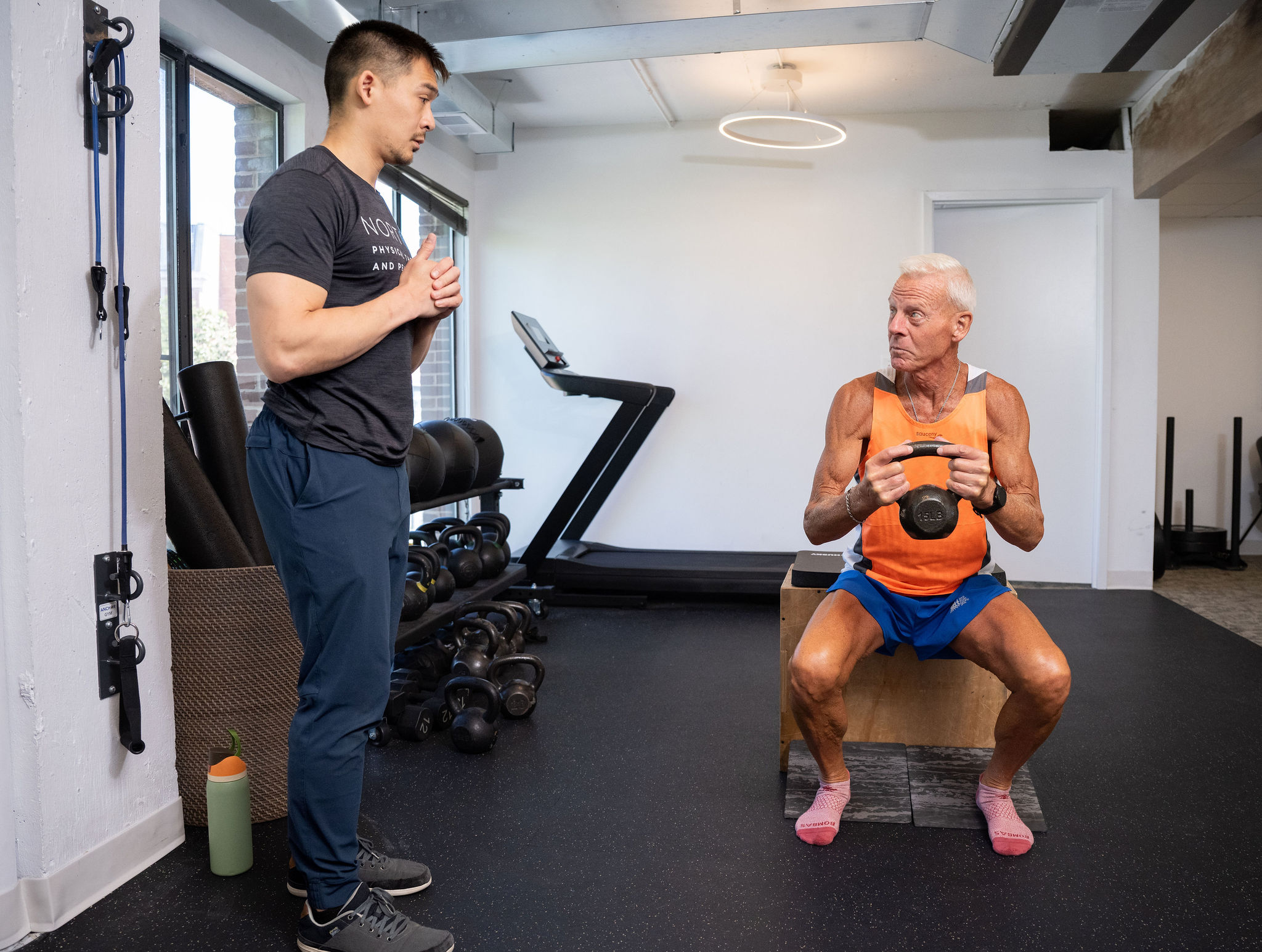
Is Strength Training Overrated for Runners? Popular Running Website LetsRun Says Yes.
Summary
A widely-shared LetsRun piece argues weight training is "vastly overrated" for runners. This post gives the claim its due (volume drives performance, and poorly-timed lifting really does cost recovery), then lays out what the headline skips: strength and plyometric work improve running economy for faster races and better late-race durability, and 15 to 20 minutes of progressive hip-and-core work twice a week is linked to a 39% lower weekly rate of overuse injuries. The catch is the dose. Generic, un-progressed routines do nothing, which is exactly why some runner studies find no effect. Bottom line: strength training isn't overrated, it's underdosed.
The Claim
"Weight training is vastly overrated for cross-country runners."
That's not a strawman. It's the literal headline of a recent LetsRun piece. Their line: a competitive runner's spare 30 minutes is better spent running, sleeping, and having a life than lifting. It's a provocative take, and it went around for a reason. It feels true. Running is what makes you a better runner, right?
If you've ever skipped the gym because you'd rather log the miles, this is the post that gives you permission. So it's worth asking honestly: is it right?
Where LetsRun Is Right (Give Them Their Due)
Here's the part most rebuttals skip: the blog isn't entirely wrong.
Volume drives performance, and strength work does cost recovery. The interference effect is real and documented. In Schumann's concurrent-training work, stacking heavy strength immediately after a hard endurance session preserved muscle but limited max-strength and neuromuscular gains, and wasn't superior to running alone. The lesson isn't "don't lift," it's that session order and recovery matter: add a heavy lift right after an exhausting long run and you get the worst of both worlds.
So who genuinely should pull back? The over-raced, fatigued runner. But their fix is rest, not a cleverer lifting schedule. For everyone in between, the interference worry is mostly a spacing problem, not a reason to skip the work. I actually agree with Marius Bakken from the article: stacking a quality session and a lift on the same day lets recovery happen over the following day or two, so the two adaptations don't fight each other.
The blog's real mistake is the leap in logic: because heavy, poorly-timed lifting can interfere, therefore all strength work is overrated. That's where the research parts ways with it.
On Getting Faster
Our research library is stacked with trials showing strength and plyometric work improve running economy without touching VO₂max. Economy is the amount of energy you burn to hold a given pace, and better economy means faster time trials, faster races, and more durability when fatigue hits late.
Spurrs found plyometrics improved economy 4 to 7% and 3K time by about 2.7%. Karsten saw heavy lifting (80% 1RM, twice a week) speed up 5K time trials. Berryman got economy gains from a single weekly session. Beattie tracked collegiate runners across a full season and watched economy and speed climb together. And Vikmoen found the payoff often lands exactly where races are won: durability late in a long, fatiguing effort.
One honest caveat: this is about the right kind of strength work, short sessions focused on progressive intensity rather than volume. Match the dose and timing to the runner, and the conflict the blog hinges on mostly evaporates.
On Staying Healthy
Two reviews from Lauersen (2013 and 2018) found strength training cuts sports injuries to under a third, and it's dose-dependent: more consistent work, more protection. It beats stretching, which showed no protective effect at all.
Then the runner-specific proof: Leppänen's 2024 trial put 325 novice runners into hip-and-core work, ankle-and-foot work, or stretching. The hip-and-core group had a 39% lower prevalence of overuse injuries, from a 15 to 20 minute program with a resistance band before their runs, progressed in intensity over time. Here's an example of what their program entailed.
And for anyone who's ever feared a stress fracture: female athletes with a sustained lifting habit had markedly stronger bones and a fraction of the stress-fracture risk (Kobayashi 2025). That's why novice and younger runners need strength work too, to build the tissue strength that keeps them running.
"But Some Runner Studies Find Nothing"
Here's where we earn your trust. They do, and the devil is in the details.
A 2024 review of runners (Wu) and the well-known New York City Marathon study (Toresdahl, Metzl, et al.) both found a strengthening program that didn't move the needle. But take a look under the hood at what those runners didn't do: no individualized exercises, no coaching or supervision, no added load as they got stronger. That isn't strength training. It's a warm-up in a strength-training costume.
Muscle, tendon, and bone only adapt when the load is progressive, individualized, and heavy enough to matter. It's the same frequency, intensity, and time formula that governs a running program. Under-dose it and you get exactly what those studies found: nothing.
Tellingly, Wu's own data showed that when programs were supervised, injury risk dropped significantly. And that runner-specific conclusion rests on roughly 1,900 runners, against the tens of thousands of athletes in the broader reviews where the effect is rock-solid.
So the takeaway isn't "strength work doesn't help runners." It's that a one-size-fits-all handout you do half-heartedly in the living room was never going to, and a program built for your body and progressed over time is a completely different animal.
What To Do About It
You don't need a barbell in your garage or two hours a week. You need the right dose, done consistently:
- Do 15 to 20 minutes, twice a week. That's the sweet spot for most everyday runners: enough to matter, not enough to wreck recovery.
- Start with hip and core work. This is the best-evidenced routine for cutting overuse injuries. A resistance band is plenty to begin.
- Progress the load. The exercises should get harder over time, with more weight, more range, more demand. If it never changes, it stops working. We like to start at 3 sets of 10 in the base phase and work down over two to three months to 4 sets of 3 to 5 reps heavy. This leads to strength gains without excessive leg fatigue the next day.
- Space it from your hardest runs. Don't add a heavy lift at the tail end of your longest, exhausting workout. Stack it with a quality session and let recovery happen over the next day or two.
- Don't let it crowd out your mileage. The blog is right that miles come first. Strength work is the secondary, not the main course... unless you are an injured or injury prone runner
When To Get Help
If you're piling on races and feeling constantly fatigued, more lifting isn't your answer. Rest is. And if you've been dealing with a nagging injury that isn't settling with a few weeks of self-directed work, that's a sign the dose or the diagnosis is off, and it's worth having someone look at it.
The Takeaway
Strength training for runners isn't overrated. It's under dosed. Smarter, individualized programming, 15 to 20 minutes of progressive hip-and-core work a couple times a week, is one of the best-evidenced things you can do for your running. Fewer injuries, better splits. Healthier and faster isn't overrated. That's a bargain.
Let's Talk
If you're a runner in Washington, DC, and we're in Georgetown, and you're not sure whether your strength routine is actually doing anything, we offer a quick discovery call. Happy to help you figure out what's worth your 20 minutes and what isn't.
References
Kobayashi T, et al. Effects of Resistance Training Experience on Bone Mineral Density and Stress Fractures in Female College Athletes: A Retrospective Cohort Study. Sports (Basel). 2025.
Leppänen M, et al. Hip and core exercise programme prevents running-related overuse injuries in adult novice recreational runners: a three-arm randomised controlled trial (Run RCT). British Journal of Sports Medicine. 2024.
Lauersen JB, Andersen TE, Andersen LB. Strength training as superior, dose-dependent and safe prevention of acute and overuse sports injuries: a systematic review, qualitative analysis and meta-analysis. British Journal of Sports Medicine. 2018.
Lauersen JB, Bertelsen DM, Andersen LB. The effectiveness of exercise interventions to prevent sports injuries: a systematic review and meta-analysis of randomised controlled trials. British Journal of Sports Medicine. 2014.
Beattie K, Carson BP, Lyons M, Rossiter A, Kenny IC. The Effect of Strength Training on Performance Indicators in Distance Runners. Journal of Strength and Conditioning Research. 2017.
Vikmoen O, Raastad T, Seynnes O, Bergström K, Ellefsen S, Rønnestad BR. Effects of Heavy Strength Training on Running Performance and Determinants of Running Performance in Female Endurance Athletes. PLoS One. 2016.
Berryman N, Mujika I, Bosquet L. Effects of Short-Term Concurrent Training Cessation on the Energy Cost of Running and Neuromuscular Performances in Middle-Distance Runners. Sports (Basel). 2020.
Karsten B, Stevens L, Colpus M, Larumbe-Zabala E, Naclerio F. The Effects of a Sport-Specific Maximal Strength and Conditioning Training on Critical Velocity, Anaerobic Running Distance, and 5-km Race Performance. International Journal of Sports Physiology and Performance. 2016.
Spurrs RW, Murphy AJ, Watsford ML. The effect of plyometric training on distance running performance. European Journal of Applied Physiology. 2003.
Schumann M, Pelttari P, Doma K, Karavirta L, Häkkinen K. Neuromuscular Adaptations to Same-Session Combined Endurance and Strength Training in Recreational Endurance Runners. International Journal of Sports Medicine. 2016.
Toresdahl BG, McElheny K, Metzl J, Ammerman B, Chang B, Kinderknecht J. A Randomized Study of a Strength Training Program to Prevent Injuries in Runners of the New York City Marathon. Sports Health. 2020.
Wu H, Brooke-Wavell K, Fong DTP, Paquette MR, Blagrove RC. Do Exercise-Based Prevention Programs Reduce Injury in Endurance Runners? A Systematic Review and Meta-Analysis. Sports Medicine. 2024.