

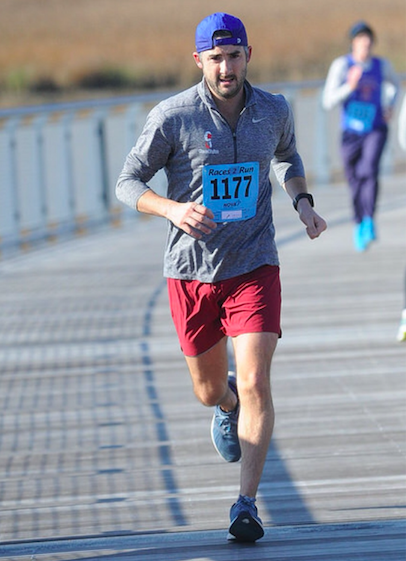
Running is repetitive nature can lead to overuse injuries if not managed properly. Rich Willy, a premier running researcher, says "all running injuries are training load injuriues." At Norton Physical Therapy in Washington, DC, we help runners prevent and recover from these injuries through expert care and personalized treatment plans. With the right strategies, you can stay active and injury-free while achieving your running goals.
This guide explores common overuse injuries in runners, how to prevent them, and how physical therapy supports long-term running health.
More blog posts
Running with Purpose: Luke Cancilla, the Premier Running Physical Therapist in Washington DC
Defying Dogma: A Journey to Knee Liberation in Physical Therapy
Reclaiming Movement: A Journey from Lower Back Pain to Dancing and Yoga with Physical Therapy
What Are Overuse Injuries?
Overuse injuries occur when repetitive stress on a particular area of the body exceeds its ability to repair and recover. For runners, the constant impact on muscles, joints, and connective tissues makes them particularly vulnerable to these types of injuries. Add to that the ten's of thousands of steps a runner makes with the same or very similar movement can lead to overloading tissue or misusing it.
Overload is simply doing more than the tissue has tolerance. Tissue tolerance plus recovery improves fitness. However, when tissue tolerance cannot keep up with recovery or the stress from activity exceeds the tissues capacity the result is often pain and injury.
Misuse is the classic "muscular imbalance." This is when the lack of hip mobility causes the lower back or knee to substiute movement to allow range of motion. Or, this is when the glutes are diminished in strength or the posture/alignment or coordination is poor and we compensate by overusing the TFL.
Common Overuse Injuries in Runners:
- Shin Splints: Pain along the shinbone caused by stress on the tibia and surrounding muscles.
- Plantar Fasciitis: Inflammation of the tissue along the bottom of the foot, leading to heel pain.
- Runner’s Knee (Patellofemoral Pain): Pain around the kneecap. Sometimes this is the patellofemoral joint or the soft tissues around it like the patellofemoral ligaments and plica.
- Achilles Tendinitis: Inflammation of the Achilles tendon, often caused by overtraining or weak calf muscles.
- IT Band Syndrome: Pain along the outer thigh caused by the iliotibial bands compression into the lateral femoral condyle due to excessive inward knee movement or pelvic drop.
How to Prevent Overuse Injuries
Preventing overuse injuries involves a combination of proper training, recovery, and attention to your body’s signals.
1. Gradual Training Progression
Frequency, intentiy and time (FIT) prinicples in a training program should be carefully measured and progressed. Too much, too soon is the one way ticket to injury-ville.
Frequency is how often or how many days you run each week. The time, or duration, of your weekly running can be easily tracked with mileage or time run per week. Your running intensity can be tracked using running pace, heart rate or rating of perceived exertion (RPE) zones.
It is encouraged to progress only one of these elements at a time. In fact, research shows runners who change more than one of the variables in their velocity, distance or frequency were more likely to be at risk of injury.
Old coaching wisdom recommends increasing weekly mileage by no greater than 10% a week. Research does not deny this wisdom but suggests some runners can advance their weekly mileage more quickly; whereas, other need to do more slowly.
Single run spikes in duration and distance of > 30% increase injury risk by 65%
Context matters in making this decision. Things like running history, injury background, goals, and non-running stressors help to inform this decision. When in doubt progress slowly and take a down or plateau week every month.
2. Focus on Strength Training
In addition to gradually increasing your mileage, incorporating strength training and cross-training into your routine can also help increase your training load capacity as a runner. Strength training can help improve your overall muscle strength and endurance, while cross-training activities like cycling or swimming can give your running muscles a break while still maintaining your cardiovascular fitness.
Evidence is favorable on strength training in runners. First, if you are a runner who wants to run faster, there is ample evidence to suggest strength training can boost your running economy and performance. For example, a 36 minute 10k runner can improve their time by 40 to 100 seconds by adding plyometric and resistance training to their running programs.
Additionally, a study of 433 runners found those who were “highly compliant” with their strength and foam rolling programs were 85% less likely to sustain a running related injury.
3. Improve Running Form
When observing someone run, we can easily see their body’s posture, leg alignment and range of motion. Add in the Runeasi technology and we can see are the forces acting on and within their body.
Runners with a slower cadence, bouncey form or slap the ground hard can have a landing impact up to 10 times a persons body weight!
An overstride or poor pelvis and knee alignement can add stress to the shins, knees and hips; whereas, a forefoot landing will add stress to the foot, plantar fascia and achilles.
An indepth gait analysis can identify weak links in a runner's form. In runner's with pain it, sometimes, can be the different between shutting down training and finishing a marathon.
4. Wear Proper Footwear
Choose running shoes that feel comfortable and promote your natural running form. They should not have hard, awkward spots or cause your landing and push off to feel "different".
5. Prioritize Recovery
Stress+ Rest = Recovery
What’s the best workout a runner should do? One they can recover from…
Rest and recovery are just as important as training when it comes to increasing your training load capacity as a runner. Make sure you are getting enough sleep each night, aiming for 7-9 hours. Additionally, incorporate rest days into your training schedule to allow your body time to recover and repair. Active recovery, such as yoga or light stretching, can also help improve circulation and reduce muscle soreness. Finally, consider getting regular massages or using foam rollers to help release tension and prevent injury
How Physical Therapy Helps Prevent Overuse Injuries
At Norton Physical Therapy, we specialize in helping runners stay healthy and strong by addressing the underlying causes of overuse injuries.
1. Comprehensive Assessments
We evaluate your painful condition to identify the cause. Additionally, we examine movement patterns, muscle imbalances, and joint mobility to identify potential risk factors and underlying dysfunction that contribute to the pain or reduce performance.
2. Gait Analysis
Our advanced gait analysis using slow motion 2D video and Runeasi provide insights into your running mechanics. We are able to identify dynamic stability, impact and limb symmetry. This informs us where the stress is going and how to reduce it through running form adjustment or an exercise program.
3. Strength and Flexibility Programs
Using our Running Movement Screen, we build a customized exercise program to address strength deficits, mobility limitations, and movement patterns that may be contributing to stress or pain.
These programs are dynamic. Every 2 to 4 weeks, they are progressed based on how you’re responding. As you get stronger, you don’t just run faster. You become more resilient to injury.
4. Hands-On Treatments
Techniques like manual therapy, dry needling, and myofascial release do more than feel good. They help reduce tension, improve circulation, and support recovery.
Many of the movement imbalances we identify can be addressed quickly with hands-on treatment, which often helps calm symptoms and restore more efficient movement. Dry needling can be especially effective at reducing pain and improving tolerance to activity.
5. Education and Prevention Strategies
We empower you with knowledge about proper training techniques, recovery methods, and injury prevention strategies tailored to your specific needs.
Why Washington Runners Trust Norton Physical Therapy
At Norton Physical Therapy, we combine expertise, advanced techniques, and personalized care to help runners in Washington, DC, prevent overuse injuries and achieve their goals. Whether you’re training for your first 5K or your next marathon, our team is here to support you every step of the way.
Overuse injuries don’t have to sideline your running journey. With proper prevention strategies and the expert care provided by Norton Physical Therapy in Washington, DC, you can stay active, strong, and injury-free.
Ready to take your running to the next level? Contact us today to schedule an evaluation and discover how physical therapy can help you run smarter and safer.